
Worried about being judged or what people might think of your performance? Here’s how to stop letting other people’s opinions hold you back.
Have you ever found yourself worrying about what other people think of your performance?
“What if I come last, and people wonder why I bothered?”
“What if people watching think I’m rubbish?”
“The results will be online! People will see.”
If any of this sounds familiar, you’re certainly not alone. As a Sport Psychologist, it’s something I hear from lots of athletes I work with. And it’s something I’ve experienced myself, too.
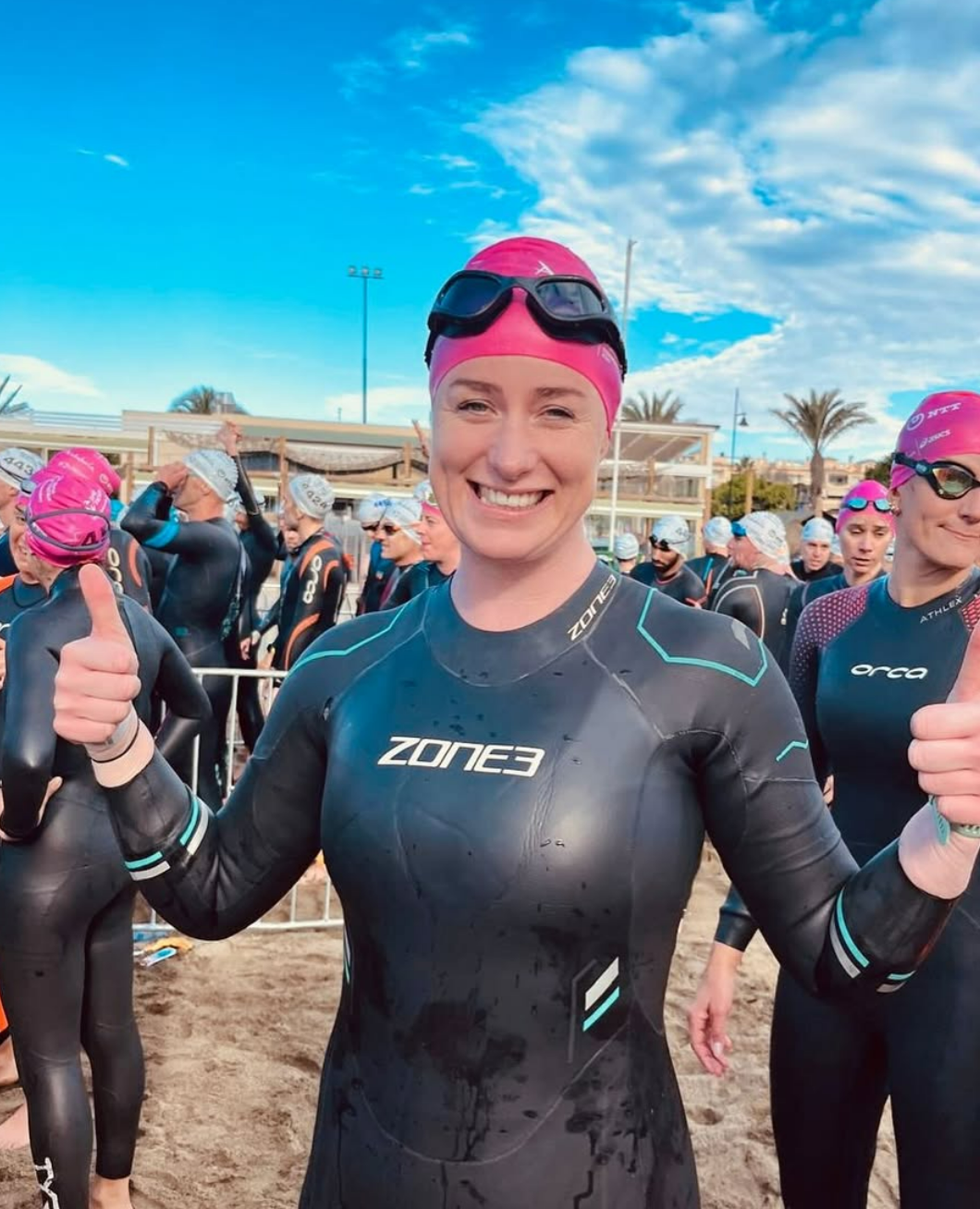
I remember feeling outrageously nervous about my first GB age-group triathlon qualifier. My brain tried hard to convince me that I’d be completely out-classed. I imagined how embarrassing it would be to have entered the race, have my result published online and have people thinking, ‘Who does she think she is? Why did she bother?’
Lovely, helpful (but actually very normal) stuff from the brain there!
So, why do we care what other people think?
First things first: caring about what other people think isn’t necessarily a bad thing. In fact, there’s a pretty good reason why we’re wired this way.
Humans are social creatures. Throughout our evolutionary history, belonging to a tribe was essential for survival. Being accepted by others and maintaining relationships helped keep us safe. Being rejected or excluded could potentially be fatal!
So, it makes sense that our brains pay attention to what other people think of us. And it’s not just about survival. Caring about others’ opinions helps us develop empathy, compassion and connection. In sport, it can also be useful to value the opinions of coaches, teammates and people whose experience and knowledge we respect.
The problem actually isn’t that we care what other people think. It’s when the fear of their judgement starts making decisions for us.
Perhaps you avoid entering a competition because you’re worried about finishing last. Maybe you hold back in training because you don’t want to look silly when trying something new. Or perhaps you don’t commit fully to your performance because you’re too busy worrying about what people might think if it goes wrong.
Rather than trying to eliminate the worry altogether, what if we focused on changing how much influence it has over our decisions?
What matters more than other people’s opinions?
Sometimes, when other people’s opinions take up a lot of our headspace, it can help to give ourselves something more meaningful to focus on.
This is where values come in.
As a Sport Psychologist, I often encourage athletes to think about the kind of person and athlete they want to be, rather than focusing exclusively on what they want to achieve.
Values are about the qualities you want to bring to your life and the way you want to approach the things that matter to you. They’re not goals or achievements that you can tick off a list. They’re more like a direction you can keep moving towards.
For example, you might value courage, curiosity, challenging yourself, determination, enjoyment, connection or personal growth.
You might have a goal of making a team. That’s something you can work towards and hopefully achieve. But what qualities do you want to bring to that journey? Perhaps you value being brave enough to put yourself out there, curious enough to learn and progress, and keen to build friendships along the way.
These are things you can put into practice regardless of whether you make the team.
And this is important when it comes to worrying about what other people think. You might not be able to control whether someone approves of your performance, but you can influence how you approach it.
Rather than spending all your energy trying to avoid looking foolish, you can focus on being the athlete you want to be.
A little exercise: what kind of athlete do you want to be?
Here are five questions to ponder:
- What do I want sport to bring to my life, beyond results and achievements? Is it enjoyment, friendship, adventure, personal growth or something else?
- What do I enjoy about taking part, training or competing? Think about the experiences that make you want to keep coming back.
- What qualities do I admire in other athletes, regardless of how successful they are? Is it their courage, determination, kindness, sportsmanship or willingness to give things a go?
- How would I like my teammates, coaches or competitors to describe me as a person? What would I like them to notice about how I approach my sport?
- When things don’t go to plan, how would I like to respond? Perhaps you’d like to be someone who is willing to learn, keeps things in perspective or shows themselves a bit of compassion.
There are no right or wrong answers. You’re simply exploring what matters to you (rather than what you think ‘should’ matter).
You can’t please everyone.
Here’s something worth remembering: there isn’t necessarily one universal definition of a good performance.
Imagine two runners finishing a 10k. One finishes in 35 minutes but is disappointed because they hoped to break 34 minutes. The other finishes in 55 minutes and is absolutely delighted with a huge personal best.
Someone watching might be impressed by the first runner’s speed. Someone else might be more impressed by the second runner’s progress. A coach might be looking at pacing, while a family member might be beyond proud that their runner dug deep and finished.
The same performance can mean very different things to onlookers, based on their own experiences, expectations and priorities. We’re all just seeing things through our own lenses.
The trouble is, if you try to deliver a performance that everyone else approves of, you’re setting yourself a pretty impossible task. You simply can’t please everyone.
So, rather than trying to manage everybody else’s opinions, perhaps it’s more useful to consider what a performance that matters to YOU would look like (back to the values!).
Whose opinion matters?
I’d also encourage you to think about whose opinions you actually value.
A wise person once said to me: ‘Don’t take critique from someone you wouldn’t take advice from.’ It’s really stuck with me, and I come back to this a lot.
Of course, this doesn’t mean you should only listen to people who tell you what you want to hear. Good coaches and teammates won’t always agree with you. Sometimes the most useful feedback is the stuff that’s a little uncomfortable to hear.
But there’s a difference between constructive feedback from someone whose judgement you respect; and worrying about the imagined opinions of people who might not know anything about you or your journey.
Who understands the hours you’ve put in, the setbacks you’ve experienced and the progress you’ve made? Who wants to help you develop, rather than simply judge the outcome?
These are the people whose opinions are worth giving your attention to.
And remember, you’re more than your result.
A time, score or placing tells you something about what happened on a particular day, but it doesn’t tell the whole story of who you are.
A disappointing race doesn’t make you a disappointing athlete. Finishing behind someone you usually beat doesn’t make you a worse person. And one poor performance doesn’t erase all the training, commitment and progress that came before it.
Results might matter to you, of course (I’m never one to diminish ambitions or competitiveness!). But they’re only one part of the picture. You can also take pride in moving towards your values: like having the courage to enter a competition, committing to trying a skill, learning from a mistake or persisting when things feel difficult.
Back to that first GB age-group qualifier…
When I actually stopped and considered why I wanted to race, I realised there were things that mattered far more to me than the opinions of people watching or looking at the results afterwards.
My values were:
- Courage: having a go, giving it my all and being willing to put myself out there.
- Curiosity: discovering what I was capable of and identifying areas I might need to work on to be competitive.
- Fun: how cool was it that I had the opportunity to compete in a GB age-group race?!
And, as it turns out, I absolutely loved it; and four years later, I’m still competing in age-group triathlon.
I still have moments when I worry about what other people think. I don’t think that’s ever going to disappear completely, and nor would I necessarily want it to. But I can keep coming back to what matters to me and remind myself why I choose to do this in the first place.
So, perhaps the aim isn’t to stop caring what other people think. It’s to make sure their opinions don’t become more important than your own reasons for being there.
Where can I go for more help with this?
If you find that worries about being judged are contributing to competition nerves, you might also find my blog on how to manage your competition nerves helpful. It includes my practical ABCD approach to working with uncomfortable thoughts and feelings.
If you’d like some support with the mental side of your sport, you can find out more about working with me.