
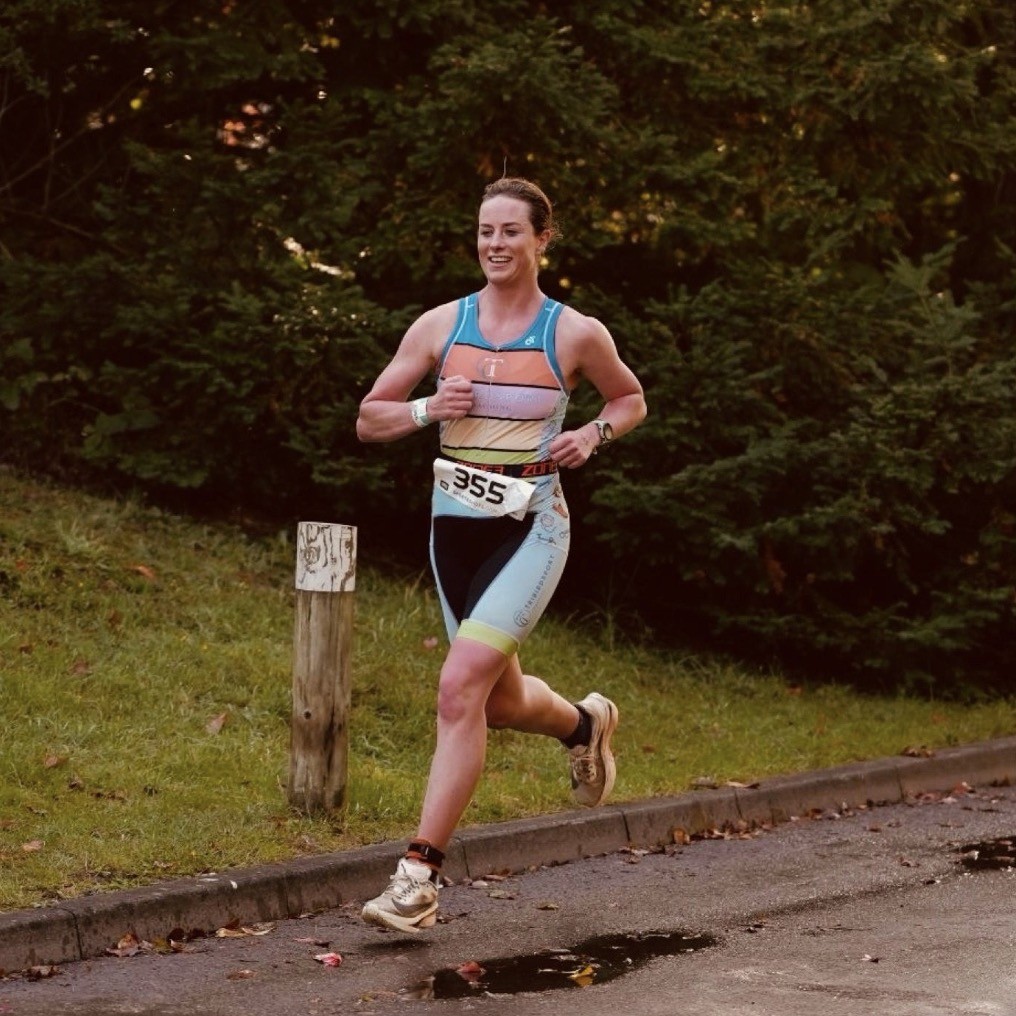
Six months to go: what marathon training can teach us about motivation, values and showing up when we’d rather stay on the sofa.
It’s six months until I run the London Marathon. Eeeek!
I’ve wanted to run London for years. I’ve entered the ballot at least ten times (I’ve lost count), with zero luck. I’ve also been on the other side of the barriers, cheer-squadding for friends, and the atmosphere is incredible. It’s been a bit of a dream to run there.
And now it’s happening! I have a charity place, and I’m running to raise money for St Peter & St James Hospice in Sussex, where my mum passed away in June. The care and compassion the team showed Mum and our family meant an enormous amount to us. I’m really excited to be raising money for them.
So, that’s one big reason I’m running. I’d also love to:
- Run a marathon a bit better than last time.
I’ve run one marathon (Brighton) before, and it was both brilliant and horrible. My quads getting so sore about two-thirds of the way through is not an experience I want to repeat! I’m curious to see whether consistent strength training and better fuelling will help me tackle those 26.2 miles more comfortably.
- Set myself up for next triathlon season.
Although the timing is slightly questionable, I’d already entered a half-Ironman in Mallorca two weeks after London. (Excellent planning, Jo.)
- Dip under four hours.
But honestly, finishing, experiencing the atmosphere of London and raising money for the hospice matter more to me than a Strava PB.
Which brings me to something I think is worth considering before embarking on any big challenge.
Why are you doing it in the first place?
Whether you’re training for a marathon, preparing for a big competition or taking on something that feels a bit outside your comfort zone, it’s worth spending some time thinking about what you’re hoping to get out of it.
Maybe you’re running a marathon to raise money for a cause you care about. Perhaps you want to show yourself that you can do something the younger you would have thought was wild. Maybe you love the challenge, the community, the adventure or simply having something to work towards. There isn’t a magical right answer, and your reasons don’t have to be particularly impressive or profound. But understanding what matters to you can be useful when the initial excitement wears off and the reality of training sets in.
Because, let’s be honest, signing up for a marathon is often the easy bit. Six months out, it can feel like an exciting adventure. You’re imagining the crowds, the finish line and that wonderful feeling of having achieved something big. Then winter arrives. The dark, cold, sideways rain is all far less enticing! Your alarm goes off, and the warmth of your bed suddenly feels like one of life’s greatest gifts (I can’t argue with that!).
Your brain can be incredibly persuasive when it comes to explaining why today’s long training run isn’t a necessity.
“It’s too cold… I’m tired… It’s a whole six months away, surely missing one run won’t matter?”
I’m not saying rest is a bad decision when it’s needed. But there will also be days when you don’t particularly want to run. This isn’t you being mentally weak; it’s just being human. We naturally tend to choose the path of least resistance. I work with plenty of athletes who sometimes really can’t be bothered, too!
But motivation and commitment are two different things. We can feel unenthusiastic or unready and still choose to do something that matters to us. One way to approach this is to think about what lies beneath your goal.
Goals and values: what makes a challenge meaningful?
As a sport psychologist, I often encourage people to think about the difference between goals and values.
A goal is something you want to achieve. For me, that includes running the London Marathon, raising money for the hospice and hopefully dipping under four hours. Goals give us a target. They can be motivating and help us focus our efforts.
But values are a little different. Values are about how you want to approach your life and the qualities you want to bring to what you do. They’re not something you tick off a list, but something you can keep putting into practice along the way.
For example, you might have a goal of completing a marathon or running your first 5k. But have a ponder: what makes that goal meaningful to you?
Perhaps it’s about courage: being willing to take on something challenging that makes you feel both excited and nervous (If competition nerves are something you struggle with, I’ve also written about how to manage your competition nerves). Perhaps it’s about connection: sharing the experience with other people, supporting a cause or being part of a running community. Perhaps it’s about personal growth: discovering what you’re capable of and learning along the way. Or perhaps it’s about doing something for yourself, making space for an adventure or showing yourself that you can commit to something that matters. You might have several reasons, and they might change in importance over time.
For me, running the marathon, raising money, and getting fitter are goals. Giving something back, doing mum proud, challenging myself to do something tough, being curious about my mindset and the journey, and learning about myself are values I can put into practice along the way.
That gives the challenge meaning beyond the start and finish line. And there’s a LOT of running between now and the finish line!
What if you don’t feel motivated to train?
Here’s the thing: having a meaningful reason for doing something doesn’t mean you’ll always feel like doing it.
You can care deeply about a goal and still have days when you can’t be bothered.
You can value being active and still prefer the sofa when it’s lashing down with rain outside.
You can be excited about a marathon and still resent the fact that your training runs are getting longer and longer every week.
This is really normal!
Acceptance and Commitment Therapy (ACT) is about making room for the tricky thoughts and feelings that can come with pursuing something meaningful, rather than waiting for them to disappear before we act. This might mean noticing your mind giving you every possible reason why running in the rain is a terrible idea, acknowledging that your run feels unappealing, and then deciding what makes sense to do.
You don’t have to convince yourself that soggy trail running is wonderful. Nor do you have to pretend to be Mary Poppins or tell yourself to be more positive! You can simply acknowledge that you don’t fancy it today, reconnect with why you chose this challenge, and make a considered decision about your next step.
Sometimes that might mean getting dressed and heading out for your planned run. Sometimes it might mean adapting the session, or resting. Your decision will depend on the circumstances, including what your body needs, not just how motivated you feel. It’s about making choices that reflect what matters to you, while being flexible enough to respond to what’s actually going on.
So, the next time I’m dreading a cold, damp winter training run, I’ll be checking in with the things that matter to me: raising money for the hospice, improving my running and preparing for long-distance triathlon next year. And, I’ll check in with my values: What would the me who values giving back, curiosity and challenge choose to do next? Not necessarily the most comfortable thing nor necessarily the hardest thing. Just a considered next step.
A quick exercise: what makes this goal matter to you?
If you’re embarking on a big challenge, whether that’s a marathon, a sporting competition or something completely different, here are four questions to reflect on.
1. What do I want to achieve?
Start with the obvious. What’s the goal you’re working towards?
Maybe it’s completing your first marathon, improving your personal best, making a team, returning to sport after a break or trying something you’ve always wanted to do.
2. Why does this matter to me?
Go a little deeper. What is it about that goal that makes it important?
Is it about personal growth, connection, adventure, giving something back or discovering what you’re capable of?
There’s no need to come up with the perfect answer. You’re simply exploring what gives the challenge meaning for you.
3. How do I want to approach this experience?
Think beyond the finish line.
What qualities do you want to bring to the journey? Perhaps patience, courage, curiosity, determination, kindness towards yourself or a willingness to learn.
How would you like to respond when things get difficult? What would you like to be proud of, regardless of the final result?
4. What’s one small action I can take that reflects what matters to me?
Values become useful when we put them into practice. If personal growth matters to you, perhaps that means being willing to learn from a disappointing session rather than writing yourself off. If connection matters, perhaps it’s arranging to run with a friend. If raising money for a cause matters, perhaps it’s sharing your fundraising page with someone who might want to support it.
The action doesn’t need to be enormous. It just needs to be a meaningful next step.
And remember, you don’t need to feel motivated, confident or enthusiastic every time you take that step. If it’s the right step for you, take it and notice what happens, without expecting your feelings to change straight away.
Six months to go. Let’s go boss the winter months.
So, that’s my starting point for the London Marathon. I’ve got a meaningful reason to run and six months of training ahead. I know I’ll have days when motivation is high, and others when it’s disappeared on annual leave without booking it.
I work with sportspeople on this stuff for a living, but that doesn’t mean I’m immune to a lack of motivation myself. What I’m hoping is that, when my motivation pulls a sickie, I can reconnect with why I signed up in the first place, what this experience means to me, and keep taking the next step towards next April. Not necessarily enthusiastically, but with a bit of perspective about why I’m doing it.
If any of this has resonated and you’re working towards a sporting or personal goal and would like some support with the mental side of performance, you can find out more about working with me.
A little something for St Peter & St James Hospice
I’m writing this monthly series to share some sport psychology tips along my marathon journey and, hopefully, raise some money for St Peter & St James Hospice along the way.
If you’d like to support the hospice, I’d love it if you donated the price of a coffee to my fundraising page. Any contribution, however small, would mean a lot to me. It’s a way of giving something back to the team who cared for Mum and our family.
Support my London Marathon fundraising
Thank you for reading, and for any support you can give.